



 Get A Quote
  (224)366-0290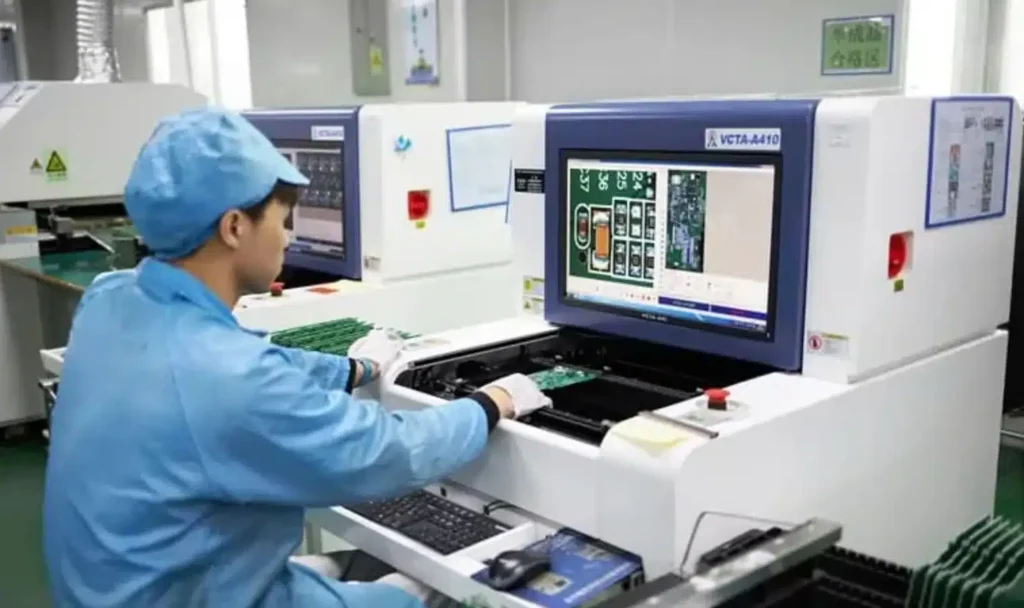
A printed circuit board plays a critical role in the operation of almost every electronic product. From consumer electronics and industrial equipment to medical devices and communication systems, the PCB connects and supports the components that make a product function as intended.
However, producing a reliable PCB involves much more than designing the circuit and assembling components. Each stage of manufacturing and assembly needs careful inspection to ensure that the finished board meets the required specifications. This is where Final Quality Control (FQC) becomes an important part of the manufacturing process.
Final Quality Control is the final evaluation process used to verify whether a PCB or assembled board meets defined quality, performance, and reliability requirements. Depending on the product, inspections may cover everything from dimensions and solder joints to electrical performance and cleanliness.
Why Is Final Quality Control Important in PCB Manufacturing?
Quality control helps manufacturers identify problems before a PCB reaches the customer or becomes part of a finished electronic product. A structured inspection process can improve reliability, reduce rework, and provide greater confidence in the final assembly.
Prevents Device Failures
Even a small defect in a circuit board can affect the performance of an electronic device. Issues such as solder bridges, incorrect component placement, damaged traces, or short circuits may cause intermittent operation or complete device failure.
A proper FQC process helps identify these issues before the board moves into the next stage of production. For companies providing pcb assembly services, consistent inspection is particularly important when boards contain high-density components or complex circuitry.
Protects Product and Brand Reputation
Customers expect electronic products to perform consistently. Repeated PCB failures can result in product returns, warranty claims, production delays, and loss of customer confidence.
A reliable quality-control system demonstrates that a manufacturer takes product consistency seriously. Companies such as Absolute Electronics Services use inspection and testing processes to help ensure that assembled boards meet the required quality expectations.
Reduces Rework and Production Costs
Finding a defect after a product has been completely assembled can be expensive. Earlier identification allows manufacturers to repair or rework the affected board before additional production costs are added.
FQC therefore contributes to more efficient production by reducing unnecessary rework, material waste, troubleshooting time, and potential product returns.
Improves Customer Satisfaction
A dependable printed circuit board assembly should perform according to its intended design. Thorough testing gives customers greater confidence that the boards they receive are ready for their intended application.
For a pcb assembly supplier, maintaining consistent quality is especially important when handling repeat orders or large production volumes.
Supports Industry and Product Requirements
Different electronic products may need to meet specific industry, customer, or regulatory requirements. Quality inspections help manufacturers verify that the finished boards conform to the applicable specifications.
The exact requirements depend on the product, application, market, and relevant industry standards.
Important Criteria for Inspecting PCB Boards
The inspection process can vary depending on the PCB design and its intended application. However, several quality factors are commonly reviewed during final inspection.
- Board dimensions: The physical dimensions, hole locations, and other mechanical features should match the design requirements.
- Surface condition: The board should be checked for scratches, plating problems, damaged areas, and other visible defects.
- Solder mask: Inspectors look for issues such as scratches, discoloration, peeling, or unwanted residue.
- Component placement: Components should be correctly positioned, oriented, and soldered according to the assembly documentation.
- Cleanliness: Flux residues, ionic contaminants, dust, and other unwanted substances should be controlled.
- Electrical performance: Electrical tests may be performed to identify opens, shorts, resistance problems, and other circuit-related faults.
- Defect history: Previous production issues can be reviewed to identify recurring problems and improve future manufacturing runs.
How Is PCB Quality Checked?
A combination of inspection and testing techniques may be used during FQC. No single method can identify every possible defect, so manufacturers generally select testing methods based on board complexity, production volume, and application requirements.
Visual Inspection
Visual inspection is one of the simplest ways to identify visible PCB defects. An inspector may examine the board for solder residue, damaged components, scratches, soldering problems, contamination, missing components, and other obvious abnormalities.
For basic boards, visual inspection can provide useful information at relatively low cost. However, modern PCBs often contain very small components and tightly spaced connections that are difficult to inspect accurately with the naked eye.
Magnification can improve inspection accuracy, but human inspection can still vary between operators. For this reason, automated inspection is often used alongside manual quality checks, particularly in high-volume or high-density PCB production.
Automated Optical Inspection (AOI)
Automated Optical Inspection, commonly known as AOI, uses cameras and software to examine a PCB or PCB assembly for potential defects.
AOI can identify problems such as:
- Missing or misplaced components
- Incorrect component orientation
- Component skew
- Solder bridges
- Insufficient solder
- Excess solder
- Lifted leads
- Damaged components
- Solder joint irregularities
- Paste registration problems
- Height-related defects
- Incorrect or absent components
AOI is particularly useful for printed circuit board assembly services because automated inspection can provide consistent results across large production quantities.
It also allows manufacturers to detect defects earlier, helping reduce rework and improve production efficiency.
PCB Cleanliness Testing
Cleanliness is another important aspect of PCB quality. Residues left behind during fabrication or assembly can affect the long-term reliability of a board, particularly in environments where moisture, heat, or electrical stress is present.
Manufacturers may use different cleanliness tests depending on the application and required reliability level.
Ionic Contamination Testing
Ionic residues can come from materials and processes used during PCB fabrication and assembly. These may include flux residues, salts, acids, and other contaminants.
If ionic contamination remains on the board, it can contribute to leakage currents, corrosion, dendrite growth, and other reliability concerns under suitable environmental conditions.
Ionic contamination testing measures the level of ionic material extracted from the PCB surface. Specialized equipment can be used to determine whether the board meets the required cleanliness level.
Surface Insulation Resistance (SIR) Testing
Surface Insulation Resistance testing evaluates how contamination and environmental conditions can affect the electrical resistance between conductors on a PCB.
SIR testing can help assess risks associated with leakage current, electrochemical migration, and dendrite formation. Higher insulation resistance generally indicates better electrical isolation between conductive features under the test conditions.
Electrical Testing Methods for PCBs
Electrical testing verifies that the board’s conductive paths and electrical connections function as expected. Different methods may be selected depending on the design and production requirements.
Flying Probe Testing
Flying probe testing uses movable probes to contact specific points on the PCB and check electrical characteristics.
It can be used to identify issues such as:
- Open circuits
- Short circuits
- Resistance problems
- Capacitance issues
- Inductance-related faults
- Diode-related problems
One advantage of flying probe testing is that it generally requires less dedicated tooling than some fixture-based testing methods. This can make it useful for prototypes, smaller production runs, and frequently changing designs.
For very large production volumes, however, testing economics may favor other approaches.
In-Circuit Testing (ICT)
In-circuit testing, or ICT, uses a dedicated fixture to access test points on the PCB. It can evaluate individual components and sections of the circuit to identify manufacturing-related defects.
ICT can provide extensive test coverage, depending on the board design and available test points. It may detect issues such as incorrect component values, opens, shorts, and certain assembly defects.
Because ICT requires dedicated fixtures, the initial setup cost can be higher. It is therefore often considered for applications where production volume and testing requirements justify the investment.
Functional Testing of PCB Assemblies
Functional testing takes PCB inspection a step further by checking whether the assembled board performs its intended function.
Instead of simply checking individual connections, the board is operated under defined conditions that represent its intended use. Depending on the product, functional testing may involve checking signals, outputs, communication interfaces, power behavior, or other application-specific functions.
Functional testing is particularly useful for complex assemblies where correct individual component placement does not necessarily guarantee that the complete assembly will operate correctly.
A manufacturer may combine functional testing with AOI, flying probe, ICT, or other inspection methods to create a more comprehensive quality-control process.
Other PCB Testing Methods
Depending on the product and manufacturing requirements, additional tests may be performed.
Solderability Testing
Solderability testing evaluates whether a surface can form reliable solder connections under specified conditions. It is useful for assessing soldering performance and helping maintain consistent joint formation.
Microsection Analysis
Microsectioning involves examining a cross-section of a PCB or plated structure under magnification. It can provide detailed information about copper thickness, plating, vias, solder connections, and internal construction.
Solder Float Testing
Solder float testing evaluates how PCB holes or plated structures respond to thermal stress during exposure to soldering conditions. It can help identify weaknesses in the board construction.
Peel Testing
Peel testing measures the force required to separate copper foil or another bonded material from the PCB substrate. This helps evaluate the bonding strength of the board construction.
Choosing the Right Quality-Control Approach
There is no single testing method that is suitable for every PCB. The appropriate approach depends on factors such as board complexity, component density, production volume, product application, reliability requirements, and customer specifications.
For example, a prototype may benefit from visual inspection and flying probe testing, while a high-volume production line may combine AOI, ICT, and functional testing.
An experienced pcb assembly manufacturer can select and combine appropriate inspection techniques to create a quality-control process that matches the needs of the product.
The goal is not simply to test the board at the end of production. Effective quality control works as part of the entire manufacturing workflow, helping identify potential problems and prevent them from reaching the finished product.
Conclusion
Final Quality Control is an essential part of producing reliable and consistent circuit boards. From visual inspection and AOI to cleanliness checks, electrical testing, and functional verification, each method provides a different layer of protection against manufacturing and assembly defects.
A well-planned FQC process can reduce rework, improve production efficiency, support product reliability, and provide customers with greater confidence in their PCB assemblies. Whether you are developing prototypes or managing high-volume production, choosing the right combination of inspection and testing methods is an important part of successful PCB manufacturing.
For businesses looking for dependable pcb assembly supplier capabilities, evaluating the manufacturer’s inspection procedures, testing options, production experience, and quality-control practices can help ensure that the finished assemblies meet the required standards and application needs.