



 Get A Quote
 (224)366-0290
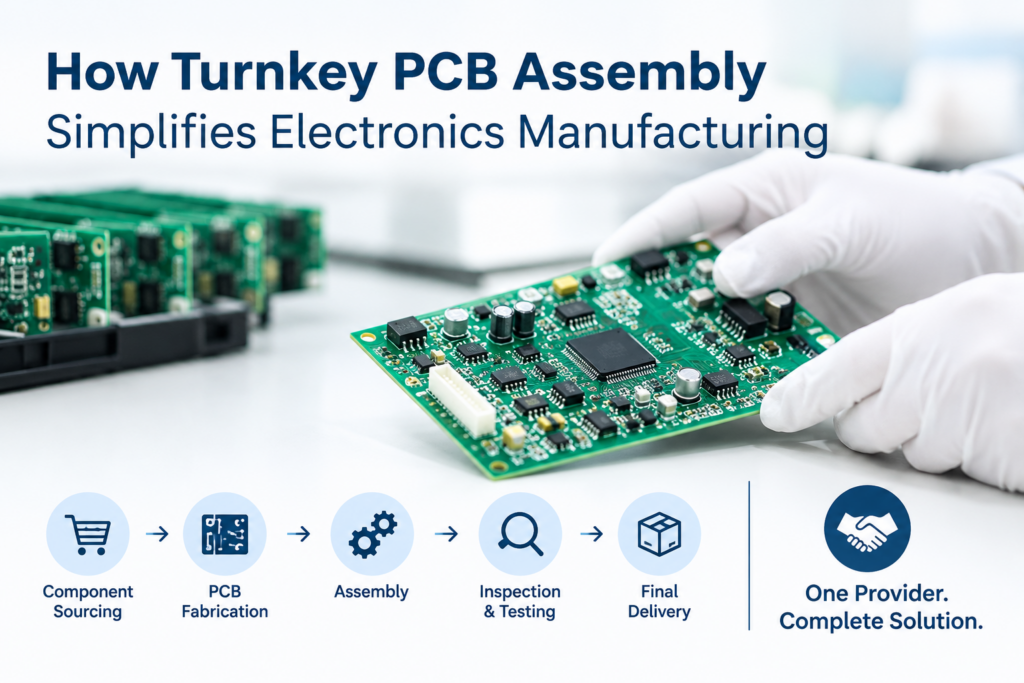
Developing an electronic product involves several stages, from sourcing components and assembling circuit boards to testing and preparing the finished product for use. Managing each step separately can take time, increase costs, and create communication challenges. This is where turnkey PCB assembly becomes a practical solution for businesses looking to simplify their electronics manufacturing process.
Turnkey PCB assembly brings multiple manufacturing activities together under one provider, helping businesses manage their projects more efficiently. Whether you are developing a new electronic device or increasing production to meet growing demand, this approach can make the entire process easier to coordinate.
What Is Turnkey PCB Assembly?
Turnkey PCB assembly is a manufacturing approach in which a single provider manages most or all of the processes required to produce an assembled printed circuit board. Depending on the project requirements, these activities may include component sourcing, PCB fabrication, assembly, inspection, testing, and final delivery.
Instead of coordinating with separate vendors for each stage, businesses work with one manufacturing partner. This reduces the effort required to manage suppliers, track materials, and monitor production progress.
For companies developing electronic products, working with an experienced pcb assembly manufacturer can simplify project management while maintaining consistent quality throughout the production process.
How Turnkey PCB Assembly Simplifies Electronics Manufacturing
One Partner for Multiple Manufacturing Stages
Traditional electronics manufacturing often requires businesses to coordinate with several suppliers. One company may handle circuit board fabrication, another may source electronic components, and a third may perform the assembly.
Managing these separate relationships can lead to delays, communication gaps, and scheduling difficulties.
Turnkey manufacturing brings these activities under one provider. With a single point of contact, businesses can communicate their requirements more clearly and track project progress with less administrative effort.
This coordinated approach is particularly useful for companies working with complex circuit board designs or tight production schedules.
More Efficient Component Sourcing
Electronic components come in many types, specifications, and package sizes. Finding the right components at the right time can be challenging, especially when dealing with supply shortages or changing market conditions.
Turnkey providers can manage component procurement based on the approved bill of materials (BOM), design specifications, and production requirements. They may also help identify suitable alternatives when particular components are unavailable, subject to customer approval and technical compatibility.
By combining sourcing and assembly planning, businesses can reduce the burden of managing multiple purchasing activities and improve production coordination.
Better Control Over Production Time
Product launches often depend on meeting specific deadlines. Delays in component delivery, board fabrication, or assembly can affect the entire manufacturing schedule.
When these activities are handled by separate vendors, coordinating their timelines can become complicated. A turnkey approach allows the provider to plan different stages together and identify potential issues earlier.
Reliable pcb assembly services can help businesses establish clearer production schedules, monitor project milestones, and respond more effectively to supply chain challenges.
Although no manufacturing process can eliminate every delay, having one coordinated workflow can make production easier to manage.
Consistent Quality Throughout the Process
The performance of an electronic product depends on several factors, including PCB design, component quality, soldering accuracy, and assembly standards. A problem at any stage can affect the reliability of the finished board.
Turnkey manufacturing allows quality checks to be coordinated across the production process. Depending on the project, these checks may include automated optical inspection (AOI), X-ray inspection for suitable assemblies, electrical testing, and functional testing.
A structured printed circuit board assembly process helps identify issues such as soldering defects, incorrect component placement, and electrical faults before products move to the next production stage.
Early detection can reduce rework, material waste, and the risk of defective boards reaching customers.
Easier Cost Management
Managing several suppliers means handling separate quotations, purchase orders, shipping arrangements, and production costs. These expenses can make it difficult to understand the overall cost of manufacturing a circuit board.
With turnkey assembly, businesses can receive a more consolidated view of project costs, depending on the provider’s quotation structure. This makes it easier to evaluate expenses related to fabrication, components, assembly, testing, and logistics.
Working with a single provider may also reduce some coordination and transportation costs. However, the actual savings depend on order volume, component availability, design complexity, and the scope of services included.
The goal is not simply to choose the lowest quotation but to achieve a balance between cost, quality, and delivery expectations.
Greater Flexibility as Production Grows
Electronics businesses often begin with prototypes or small production runs before moving to larger quantities. A manufacturing process that works for a limited batch may need adjustments when demand increases.
A turnkey partner can help plan production according to changing requirements, provided its equipment, capacity, and processes support the project.
For example, a business developing an industrial controller may initially need a small batch for testing. After validating the design, it may require larger quantities for commercial distribution. Working with a provider that supports both stages can simplify the transition from prototype development to regular production.
When evaluating printed circuit board assembly services, ask whether the provider can accommodate your current order size and anticipated future demand.
Which Businesses Can Benefit from Turnkey PCB Assembly?
Turnkey PCB assembly can support a wide range of industries that depend on reliable electronic components and circuit boards.
Common applications include:
- Industrial electronics: Control panels, automation equipment, monitoring systems, and machine controllers.
- Medical electronics: Electronic assemblies used in medical equipment, subject to applicable regulatory and quality requirements.
- Consumer electronics: Devices such as home appliances, smart products, and personal electronic equipment.
- Automotive electronics: Control modules, monitoring systems, and other vehicle-related electronic assemblies.
- Telecommunications: Circuit boards used in communication equipment and networking devices.
The level of testing, documentation, traceability, and quality control required will vary by application. Businesses should select a manufacturing partner whose capabilities match their product’s technical and regulatory requirements.
How to Choose the Right Turnkey PCB Assembly Partner
Choosing a suitable provider is an important step toward building a dependable manufacturing process. Before making a decision, consider the following factors.
Manufacturing Capabilities
Review the provider’s experience with surface-mount technology (SMT), through-hole assembly, mixed-technology boards, and the component packages used in your design. Make sure its capabilities match your project’s complexity.
Component Sourcing Process
Ask how components are sourced, how suppliers are evaluated, and how authenticity and traceability are managed. These practices are especially important when working with specialized or high-value electronic components.
Quality Assurance and Testing
Understand which inspection and testing methods are available. The right approach depends on your product, design, operating environment, and reliability expectations.
Communication and Project Support
A dependable manufacturing partner should provide clear updates about material availability, production progress, technical questions, and potential delays. Good communication helps prevent misunderstandings throughout the project.
Scalability and Delivery
Check production capacity, typical lead times, minimum order requirements, and the ability to support future demand. Delivery estimates should account for component availability and the complexity of your assembly.
A capable pcb assembly supplier should offer transparency about its processes and help you understand what is included in the proposed manufacturing solution.
Turnkey PCB Assembly vs. Traditional PCB Assembly
The main difference between turnkey and traditional manufacturing is how responsibilities are distributed.
In a traditional arrangement, a business may purchase bare PCBs from one vendor, source components independently, and send the materials to another company for assembly. This can provide greater direct control over individual suppliers but requires more coordination.
With turnkey manufacturing, one provider manages the agreed-upon stages of production. This can simplify communication, procurement, scheduling, and quality coordination.
Neither approach is automatically the best choice for every project. Businesses with established supplier networks or specialized sourcing requirements may prefer a split model, while companies seeking a more streamlined process may benefit from turnkey support.
The right choice depends on internal resources, project complexity, purchasing priorities, and production goals.
Why Turnkey PCB Assembly Matters for Long-Term Growth
As electronics products become more sophisticated, manufacturing teams must balance product quality, cost control, supply chain reliability, and delivery schedules. Managing every stage independently can consume valuable time that could otherwise be spent on product development and business growth.
Turnkey assembly offers a more coordinated way to handle these responsibilities. By bringing sourcing, fabrication, assembly, and testing together where available, businesses can simplify workflows and maintain better visibility across the manufacturing process.
An experienced manufacturing partner can also help identify production challenges, discuss design-for-manufacturing improvements, and support more informed decisions as product requirements evolve.
Conclusion
Turnkey PCB assembly simplifies electronics manufacturing by bringing essential production activities together under one coordinated process. Absolute Electronics Services helps businesses streamline their manufacturing workflow, improve communication, support quality control, and simplify production planning.
Before selecting a provider, evaluate its technical capabilities, component sourcing practices, inspection methods, pricing transparency, and ability to meet your production requirements. Choosing the right manufacturing partner can help you move from an approved circuit board design to a dependable assembled product.
For businesses looking to streamline manufacturing without compromising quality and performance, turnkey PCB assembly can be a valuable approach to building and scaling electronic products with confidence.